
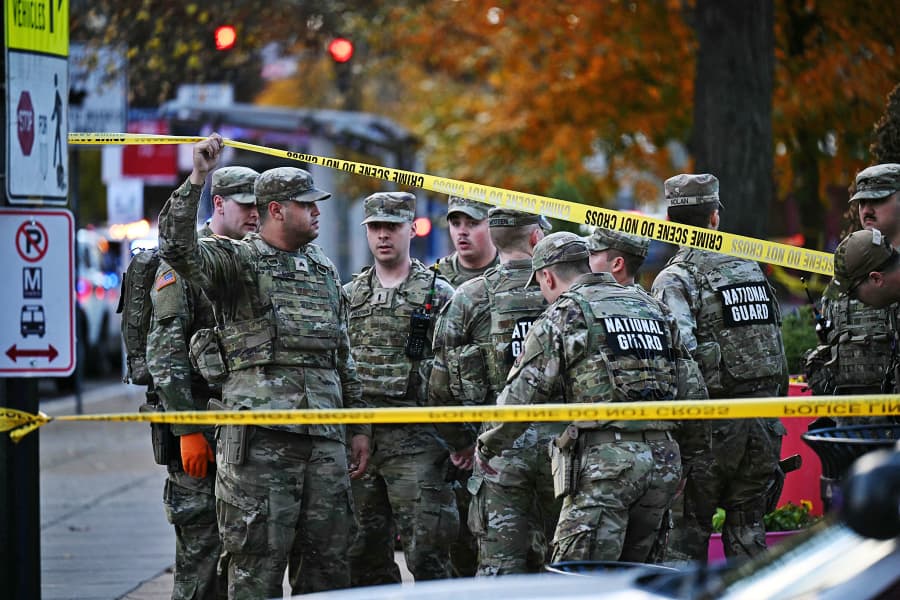
On November 26, 2025, just blocks from the White House in Washington, D.C., two members of the West Virginia National Guard were shot during what local authorities describe as a “targeted” attack near the entrance of the Farragut West Metro Station. A suspect has been taken into custody; he was also shot and is being treated. The incident triggered a brief lockdown of the presidential complex and surrounding buildings. Wikipedia+2Military.com+2
The unexpected violence in the heart of the U.S. capital has far-reaching implications — for public safety, perceptions of security, and even the ongoing debate about the deployment of military forces for domestic policing. Below is a deeper look into what happened, why it matters, and how you — the reader — can interpret and respond to this news in a practical, thoughtful way.
What Actually Happened in Washington, D.C.
At around 2:15 p.m. local time, gunfire erupted near 17th and I Streets NW, just two blocks from the presidential residence. Reports indicate the suspect approached guard members on patrol and opened fire, striking two guardsmen — both from West Virginia — and a third individual. One of the guardsmen reportedly returned fire. Wikipedia+2Washington Examiner+2
Emergency services quickly cordoned off the area around Farragut Square and the metro station entrance as unclear and frightened pedestrians fled. The suspect was subdued and taken into custody; he was also wounded, although not believed to be in life-threatening condition. Both guardsmen were transported to local hospitals, where officials say they remain in critical condition. The Washington Post+2Al Jazeera+2
In the immediate aftermath, the Metropolitan Police Department of the District of Columbia (MPD), Federal Bureau of Investigation (FBI), and the U.S. Secret Service secured the scene — also prompting a lockdown of the White House and surrounding government buildings. The Washington Post+2Al Jazeera+2
Who’s Affected — And How
At the obvious level, the two guardsmen and the suspect are directly affected: physical injuries, hospitalisation, and uncertainty about recovery. The location — so close to the White House, in a busy metro area — underscores how even high-security zones can become sites of unpredictable violence.
Beyond immediate victims, the shooting shakes public confidence in safety around essential federal facilities: metro stations, downtown streets, and even transit hubs near symbolic and strategic landmarks. For local residents, commuters, and visitors, it brings into sharp focus the risk inherent in urban centers, especially amid heightened military and law-enforcement presence.
Politically and legally, the incident inflames an already controversial debate: the deployment of out-of-state National Guard troops in the capital — a policy recently challenged in court. A federal judge had ruled the deployment likely illegal, but allowed the troops to remain while the decision is appealed. The shooting now fuels strong arguments on both sides — for proponents who claim it shows the necessity of a heavy security presence, and for critics who warn it militarizes civic spaces. Wikipedia+2The Guardian+2
Finally, there is a broader societal ripple — fear, uncertainty, and questions about civil-military boundaries. When armed troops patrol city streets, and then become targets themselves, it blurs the line between security and danger.
What This Could Mean for You — And What You Can Do
If you follow U.S. politics, global security trends, or are simply a concerned global citizen, there are a few takeaways worth reflecting on.
-
Stay alert to your surroundings, especially in major cities with high-profile government buildings or security deployments. Incidents can happen — even where you least expect them.
-
Question and critically follow policy decisions. This event may strengthen calls for increased militarized policing — but also provides ammunition for those warning against such policies. It’s a moment to reflect on civil liberties, public safety, and accountability.
-
Consume and share information responsibly. With conflicting reports (e.g. initial statements that the guardsmen were dead, later corrected), it shows the importance of waiting for verified sources before drawing conclusions.
-
Think globally, act locally. While this happened in Washington, D.C., it reflects dynamics increasingly relevant elsewhere: militarization of law enforcement, urban vulnerability, societal polarization. These are patterns to observe in your own context too — and to question.
-
Engage in public dialogue — on safety, governance and the role of military forces. Public opinion shapes policy. Awareness and informed discussion can influence how such events are handled in the future.
Snapshot: Key Facts
| Detail | Information |
|---|---|
| Date & Time | November 26, 2025, ~2:15 p.m. local time |
| Location | 17th & I Streets NW, near Farragut West Metro Station — ~2 blocks from White House |
| Victims | 2 members of West Virginia National Guard, plus a third individual (the suspect) |
| Status of Victims | Guardsmen in critical condition; suspect also wounded but not life-threatening Wikipedia+2Washington Examiner+2 |
| Suspect | Apprehended; under custody; motive unclear The Guardian+2Al Jazeera+2 |
| Response | Metro area cordoned off; White House + nearby buildings locked down; additional 500 National Guard troops deployed to DC streets at request of Donald Trump. The Guardian+2AP News+2 |
In Short — Why It Matters
This is more than a crime report. It exposes deep tensions in how societies try to balance public safety, civil liberties, and the role of armed forces in civilian spaces. The shooting near the White House is a wake-up call: even high-security areas are vulnerable; the presence of troops does not guarantee safety; and decisions about security force deployments carry far-reaching consequences.
For readers worldwide, it’s a reminder to stay vigilant and thoughtful. Security isn’t just about brute force — it’s about trust, accountability, and smart policy.
Frequently Asked Questions
-
Who were shot in the November 26, 2025 incident in DC?
Two members of the West Virginia National Guard stationed in Washington, D.C. on patrol near Farragut West Metro Station. Wikipedia+1 -
Where exactly did the shooting occur?
At the corner of 17th and I Streets NW, near the entrance to the Farragut West Metro Station — roughly two blocks from the White House. The Washington Post+1 -
What is the condition of the injured guardsmen?
As of latest reports, both guardsmen are in critical condition. Officials had earlier provided conflicting reports about whether they had died. The Washington Post+2People.com+2 -
Was the suspect arrested?
Yes — a suspect is in custody, and was also shot during the incident, though his injuries are not believed to be life-threatening. Wikipedia+2Washington Examiner+2 -
Was the shooting considered targeted?
Yes — law enforcement described the incident as a “targeted shooting,” indicating the guardsmen may have been deliberately attacked. Al Jazeera+1 -
What immediate security response followed the shooting?
The area around the metro station was locked down, multiple buildings near the White House were secured, and additional National Guard troops were deployed to patrol the city. The Guardian+2AP News+2 -
Why are National Guard troops in Washington, D.C. at the moment?
They were deployed in August 2025 by the president to help with public safety and crime deterrence — a controversial move that has sparked legal challenges. Wikipedia+2Al Jazeera+2 -
Is this deployment legally contested?
Yes — a federal judge recently ruled the deployment likely violates laws limiting military forces’ domestic law enforcement role. However, the ruling has been temporarily stayed pending appeal. Wikipedia+2The Guardian+2 -
Could this shooting change public policy or troop deployment decisions?
Very possibly. The attack strengthens arguments both for maintaining a heavy security presence (to protect federal sites) and against further militarization of policing in civilian areas. -
What can ordinary citizens outside the U.S. learn from this incident?
It underscores the delicate balance between security and civil liberties. It serves as a caution: deploying armed forces domestically can create risks, provoke backlash, and blur lines between defense and policing — lessons relevant for any country.





0 Comments